
Top tips for spotlighting possums like a pro
We hit up our field team for their best tips to have you spotlighting possums like a pro. These tips bring together field know‑how and local experience so you can spotlight like a pro and give possums fewer chances to slip past unseen.
1. Plan your route and learn the signs

Possum scratches like on this tree (left), and fresh possum poo, are good signs there might be a possum about.
Choosing a good location ahead of time is one of the biggest keys to success. If you have heard or seen possums in your garden or local reserve before, visit the area in daylight to look for possum sign such as fresh droppings, scratched or bitten tree trunks, flattened tracks through grass, or plants with gnawed leaves and buds.
A daytime recce also lets you check for hazards and plan a safe route: you can tidy away hoses, toys and bikes, find where paths, steps and fences are, and make sure you will not be roaming around randomly shining torches into bedroom windows or towards traffic. Familiar, local spots are perfect – backyards, nearby streets, local parks, reserves, and bushy neighbourhood edges all work well.
Possums are known to be active an hour or two after dark - if the weather is dry! Possums do not like getting wet so it's very unlikely to see one if it's raining or windy - so plan your spotlighting for an evening that is calm and starry!
2. Bring a decent torch and dress for a slow winter wander
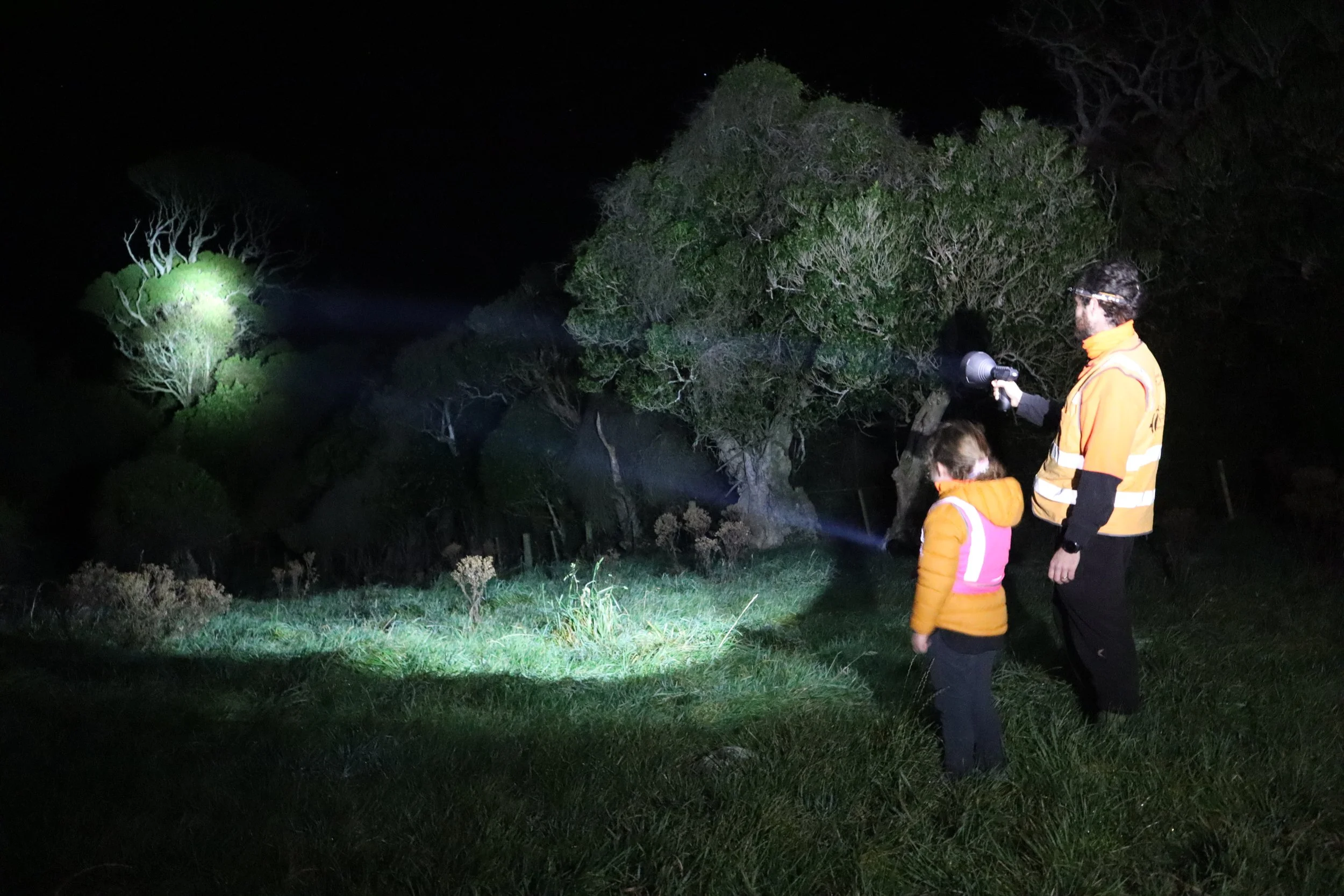
The Halo Project’s Conor and his daughter Rātā spotlighting in their winter woollies on a farm.
You do not need specialist hunting gear, but your torch choice does matter. A standard headlamp or handheld torch is ideal, and something in the 100–180 lumen range is usually enough to pick up possum eyeshine over a useful distance. Phone lights are bright up close but tend not to throw light far enough to hit the reflective part of a possum’s eye, so they are not reliable on their own, and very powerful spotlights are best avoided in urban areas where they can annoy neighbours or interfere with traffic.
Dress as though you are going to be moving slowly in cold air. Warm layers, a beanie, and “quiet” clothing like fleece (rather than rustly raincoats) make it easier to linger without spooking possums. Sturdy, non‑slip footwear – gumboots, tramping boots or decent walking shoes – are important if you are crossing wet grass or uneven ground in the dark. Before you head out, check and charge your batteries so you are not left in the dark halfway through.
3. Go slow, stay quiet, and “behave like a possum”
Once you are out, think like the animal you are trying to find. A reminder that possums will not harm nor attack you as you seek them out – they are shy and easily startled – so slow, quiet movement will almost always beat rushing around with a bright light. Walk gently, keep talking to a minimum, and avoid sudden swings of the torch – a calm, steady beam gives your eyes time to catch that tell‑tale flash of red‑orange.
Sticking to familiar routes keeps the outing simple and safe, especially with children. If you’re heading out with the youngsters, our suggestion is to stay local, supervise kids, and keep the mission short and enjoyable rather than turning it into an epic expedition.
4. Search for eyeshine, not full possums
Our team reckon your best way to spot a possum is to look for eyeshine first rather than trying to spot a full possum shape. Many animals reflect light in their eyes, but possums typically show a strong red‑orange glow in a torch beam, and once they are looking at you they will often keep watching or stay in the same place even as you move closer.
That eyeshine can appear higher in trees than you might expect, so take your time scanning slowly across the canopy. If you do see a pair of glowing eyes, keep the beam on them gently rather than flicking away – that is often when you can confirm the body shape, tail and behaviour.
5. Scan smart – and remember possums are not only in trees

Can you spot the possum in the tree to the left?
Where you shine your torch matters. Instead of standing directly under a tree and looking straight up, walk along bush margins, roads or footpaths and scan the opposite side, sweeping your torch from the outer edges of the canopy in towards the trunk. Possums like to hug into dark nooks and tree branch forks, so moving the light slowly increases your chances of catching eyeshine in those tucked‑away spots.
Don’t forget the rest of the landscape. Possums may be on fences, in bushes, around sheds and compost bins, or even on balconies and in paddocks – and a good proportion of trapped possums are actually caught on the ground. A slow scan along fence lines, garden edges and open grass can be just as productive as gazing into trees.
6. Let sound lead you to possums
Possums are nocturnal and often heard before they are seen. Possums like to forage at night and at this time of year male possums are looking for mating partners. They can make up to 18 different noises, including grunts, growls, hisses, screeches and unsettling cackles, and they may also rustle through leaves or crash clumsily through branches.
If you hear these sounds, pause and use them as a guide. Turn your torch off for a moment if needed, listen carefully to pinpoint the direction, then turn it back on and scan that area slowly for eyeshine or movement. Even if you never quite find the possum with your light, hearing one is still valuable information and well worth reporting in the form.
7. Bookmark the reporting page – and report everything

The final step is making sure what you find turns into useful data.
Before you head out, have a look at the Report a Possum page on our website and consider bookmarking it on your phone or device so you can easily record information in real time.
During or after your walk, use the online form to report what you saw or heard – possums or “no possums tonight”. Both are valuable: sightings help show where possums are still active, and “no possums seen” helps confirm where they are absent and where Predator Free Dunedin’s mahi is paying off.