
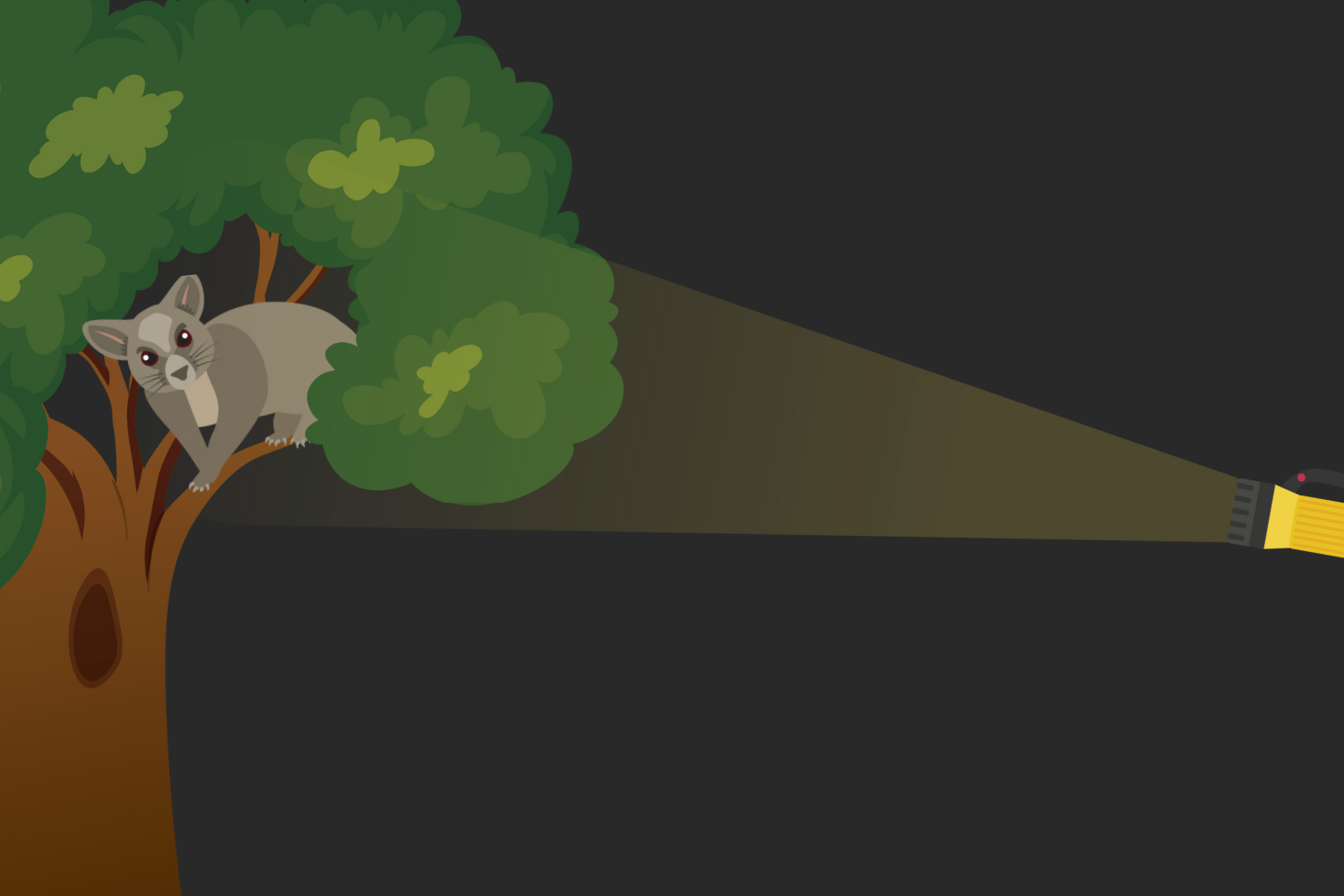
Spotlight on Possums
22nd to 28th of June 2026, anytime after dark.
Grab a torch and help put the spotlight on possums in Ōtepoti/Dunedin.
Spotlight on Possums is a fun, family-friendly way to take part in local conservation — no traps, no special gear, just a torch, warm clothes, and a bit of curiosity.
For one week in mid-winter, we are asking Ōtepoti/Dunedin residents to head outside after dark, look and listen for possums in backyards, parks, reserves and bushy areas around the neighbourhood, and tell us what they find through the online reporting form. Whether you spot a possum or report “no possums seen”, it all helps build a clearer picture of where possums are active and where they are not.
Now in its fourth year, Spotlight on Possums has become a winter fixture for Ōtepoti/Dunedin whānau, flatmates, neighbours and nature nerds alike — a short night-time wander that helps protect native birds, bush and backyards.
How to take part.

1. Pick a night
Choose one or more nights between 22 and 28 June and head out any time after dark. For the best chance of spotting possums, pick a dry, calm night — they are much less active in rain or strong wind.

4. Move slowly and quietly
Walk quietly and avoid shining lights around randomly - or into houses! Slow, calm searching gives you a much better chance of spotting possums and is kinder on neighbours and wildlife too.

2. Choose a familiar place
Start somewhere local and familiar, like your backyard, street, local park, reserve, or bushy areas around your neighbourhood. If you can, check the area in daylight first so you can plan your route, look for possum sign, and avoid trip hazards.

5. Look and listen
Shine your torch into trees, along fence lines, into bushes, around sheds and compost bins, and across the ground — possums are not only found in trees. Listen for rustling, hissing, screeching, grunting or cackling, and watch for eyeshine rather than trying to see the whole animal straight away.

3. Bring a torch and dress warm
A headlamp or handheld torch is ideal. A typical modern torch in the 100–180 lumen range is usually enough to pick up possum eyeshine; most standard headlamps will do the job. Wear warm, “quiet” clothing, sturdy shoes or gumboots, and make sure your batteries are charged.

6. Report what you find
Seen a possum? Tell us. Seen or heard nothing at all? That still matters. Use the online reporting form to log either a possum sighting or a “no possums seen” result — both help build a clearer picture of possum activity across Dunedin.
How do I spot a possum?
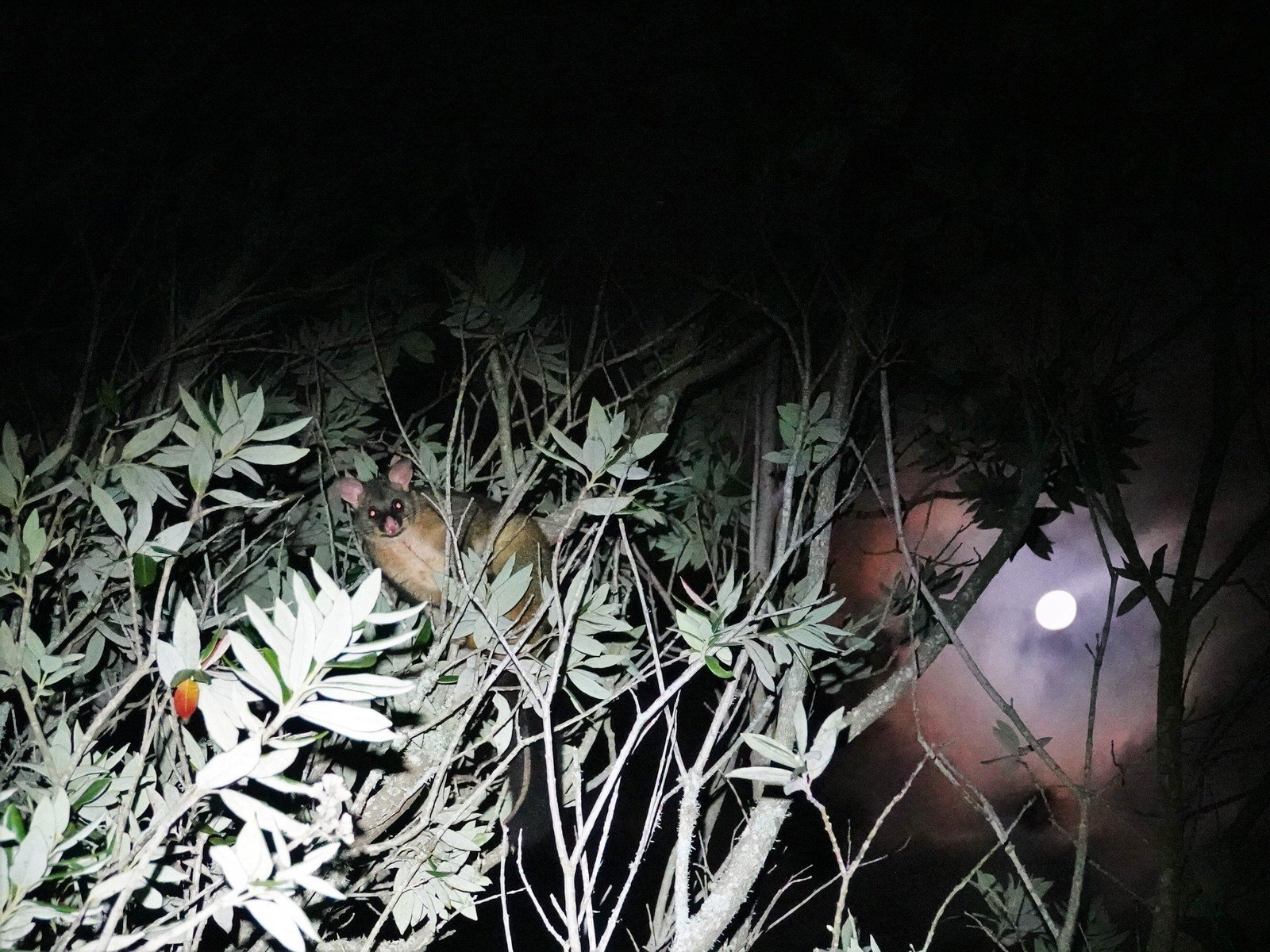
Look for eyeshine rather than the whole animal. In your torch beam, possum eyes usually show as a strong red–orange glow, and the animal may hold still and keep looking at you for a moment.
Walk along bush margins, paths, fence lines or roads rather than standing right under a tree and looking straight up. Scan the canopy slowly from the outer branches inward, and also check bushes, sheds, fences, balconies and the ground, because possums are not only found in trees.
-
Possums have a furry body, long bushy tail, short front legs, protruding brown eyes and pointed ears. They can vary in colour from a rich-red brown, to dark brown, and grey with a silver tinge in their fur.
Possums are nocturnal and usually come out at night. If you shine a torch in the trees, you may see their eyes reflect a red light.
-
A standard headlamp or handheld torch is ideal. Anything in the 100–180 lumen range is usually enough to pick up possum eyeshine; most modern headlamps fall into this bracket. Phone lights are generally not strong enough, and very powerful spotlights should be used with caution in urban areas because they can annoy neighbours or interfere with traffic.
-
Any time after dark - but possums are often most active an hour or two after nightfall, especially on dry nights. Spotlight on Possums is timed around the full moon, when possums are more active and easier to see.
-
Choose a dry, calm night if you can. Possums do not like getting wet or battered by wind, so you are much less likely to see them when it is raining or very windy.
-
Start somewhere local and familiar: your backyard, street, nearby park, reserve, or bushy areas around your neighbourhood. Walk along bush edges, paths or roads and scan the opposite side - trees, bushes, fence lines, sheds, compost bins and even balconies and paddocks can all be good possum spots. Check out your route beforehand in the daylight so you can see any trip hazards or other obstacles.
-
Listen for rustling and for calls such as hissing, screeching, grunting or cackling. Even if you only hear a possum but do not see it clearly, that is still useful information and worth reporting.
-
“No possums seen” is still a really valuable result. It helps confirm areas where possums are absent as well as where they are active, and shows where Predator Free Dunedin’s work is making a difference.
-
Please do not approach, capture or harm it. Make a note of where and when you saw or heard it and submit a report through the online form — if you are in one of the current target areas, the team may follow up.
-
Yes, provided you keep it simple and stick to familiar places. The guidance is to supervise children, wear warm clothing and sturdy shoes, and keep to safe, well‑known routes rather than steep or unfamiliar terrain.
-
The Otago Peninsula is now officially possum‑free, and ongoing community reporting helps keep it that way. Reports from adjoining buffer suburbs — like The Cove, Waverley, Shiel Hill, Andersons Bay, Musselburgh and Ocean Grove/Tomahawk — act as early warnings if possums start turning up nearby.
Why are possums a problem?
Possums are a major threat to native wildlife and plants. They eat the leaves, flowers, and fruit of native plants and can strip entire trees.
Possums also eat the eggs and chicks of native birds, and insects like wētā and snails. They also compete with native wildlife by eating the same food and taking over nest sites that would otherwise be used by some native birds.


