
The green light moment: switching on Halo’s FTP smart-trap network
Predator Free Dunedin and The Halo Project’s network of FTP “smart traps” across the Kāpuka-taumāhaka/Mt Cargill and West Harbour “zero density” zone has now been switched on – a major step forward for predator control in the Predator Free Dunedin landscape. Although the hardware has been in place for some time, the team has deliberately moved at a cautious pace so that partners could be confident the system would minimise risks to local kākā while still doing the job on target predators.
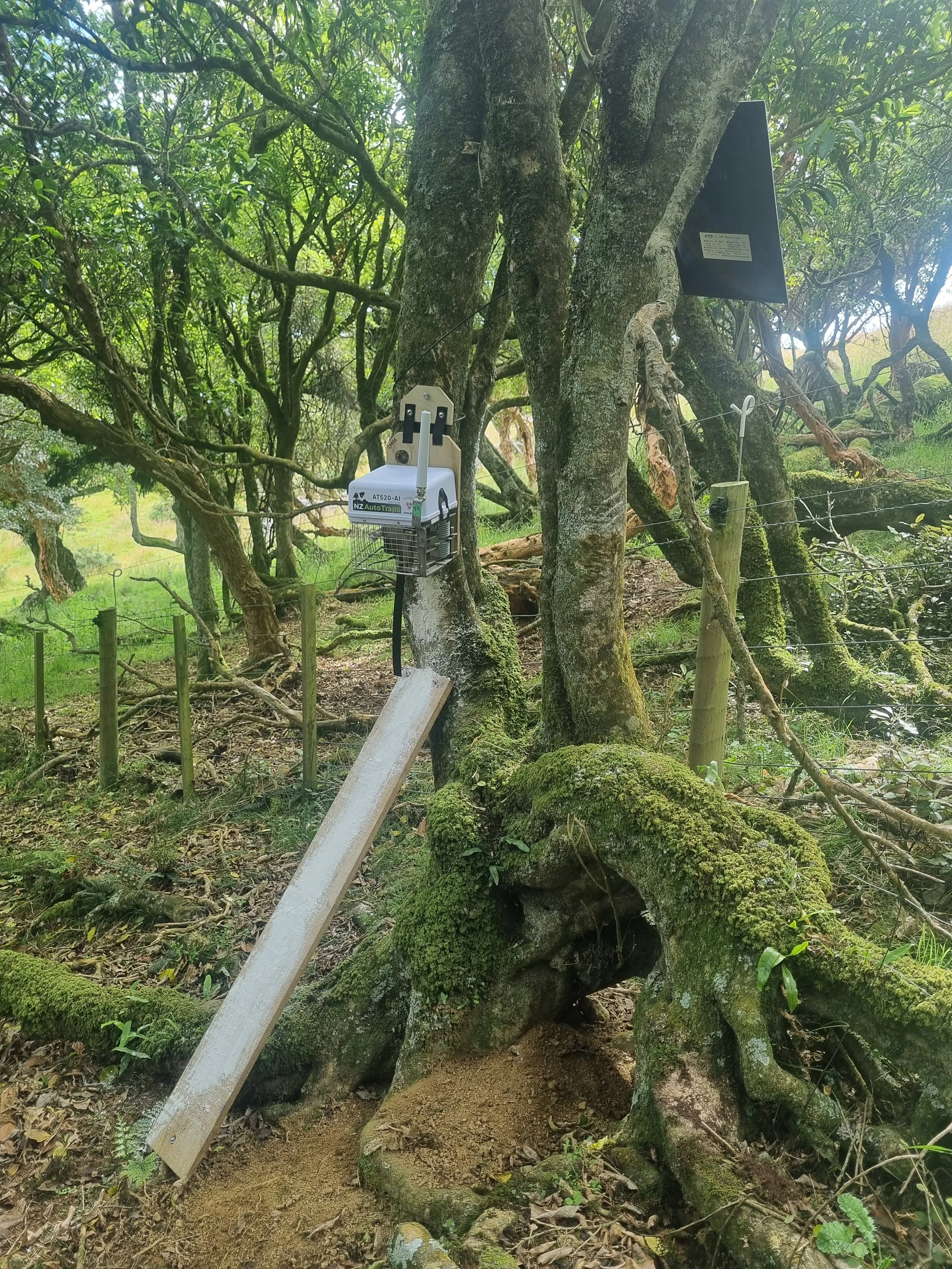
FTP Solutions’ TrapNode technology upgrades the standard AT220 into a solar-powered, networked trap (sold commercially as the AT520‑AI) that uses cameras, wireless mesh networking and artificial intelligence to distinguish target pests from native species before arming. This early adoption in the Halo “zero-density” zone is helping test how next-generation traps can support large-scale possum elimination while holding firm to the ecological and community values that underpin Predator Free Dunedin.
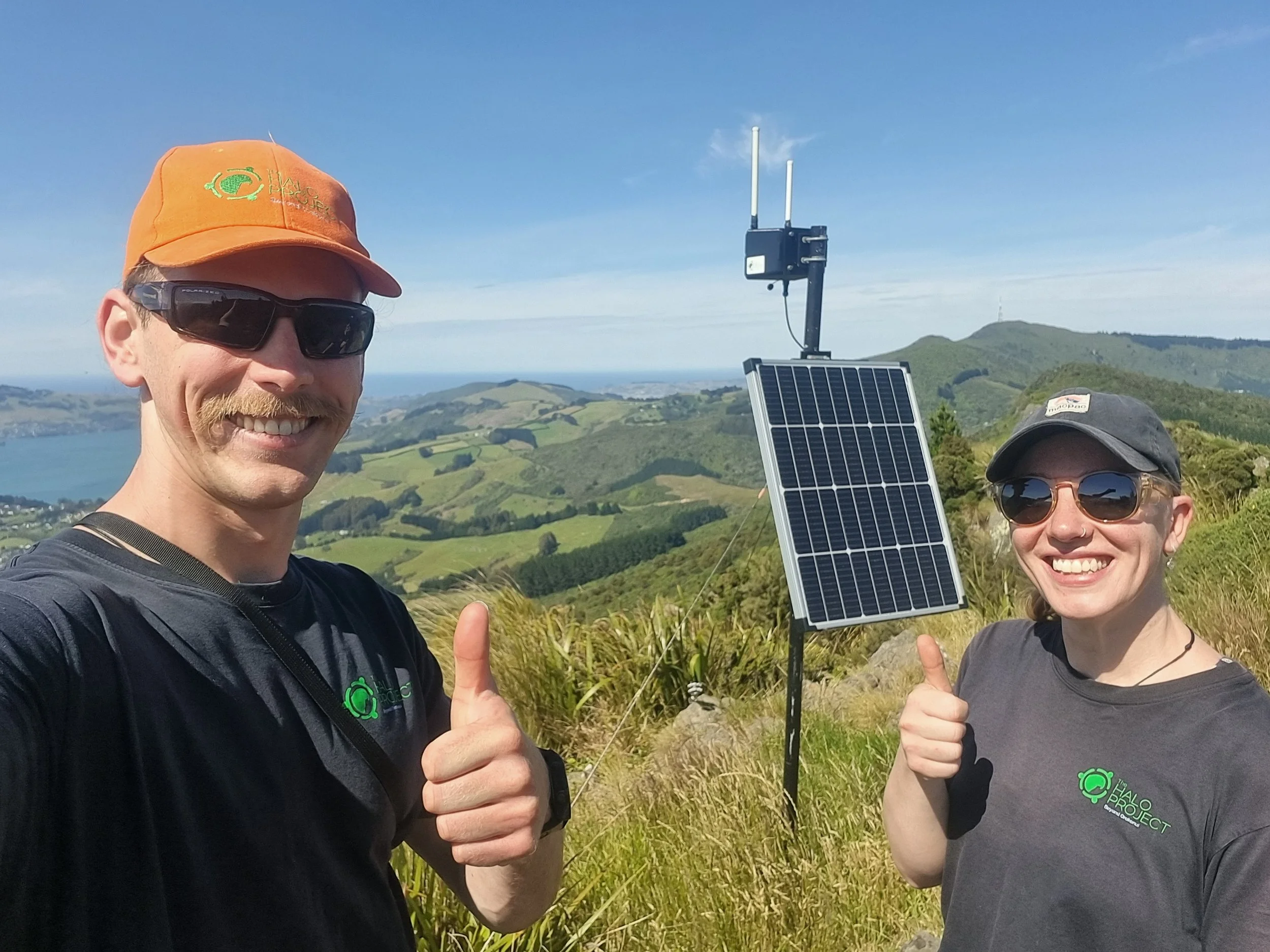
Halo Project rangers Kim and Abby at the network’s Mihiwaka Gateway.
Partnership and kākā protection at the centre
From the outset, PFD and the Halo team treated stakeholder engagement as core to the FTP rollout rather than an add‑on. Ongoing kōrero with Kāti Huirapa Rūnaka ki Puketeraki, the Otago Natural History Trust / Orokonui Ecosanctuary, and the Department of Conservation has been especially important, as all three have a strong focus on reducing risks to kākā now moving well beyond the Orokonui fence. More than 1,700 filmed interactions between kākā and FTP‑enabled traps have been reviewed, and in none of these did the system progress to the “armed” state – a result that has helped give these stakeholders confidence to support switching the full network on.
How the FTP system works
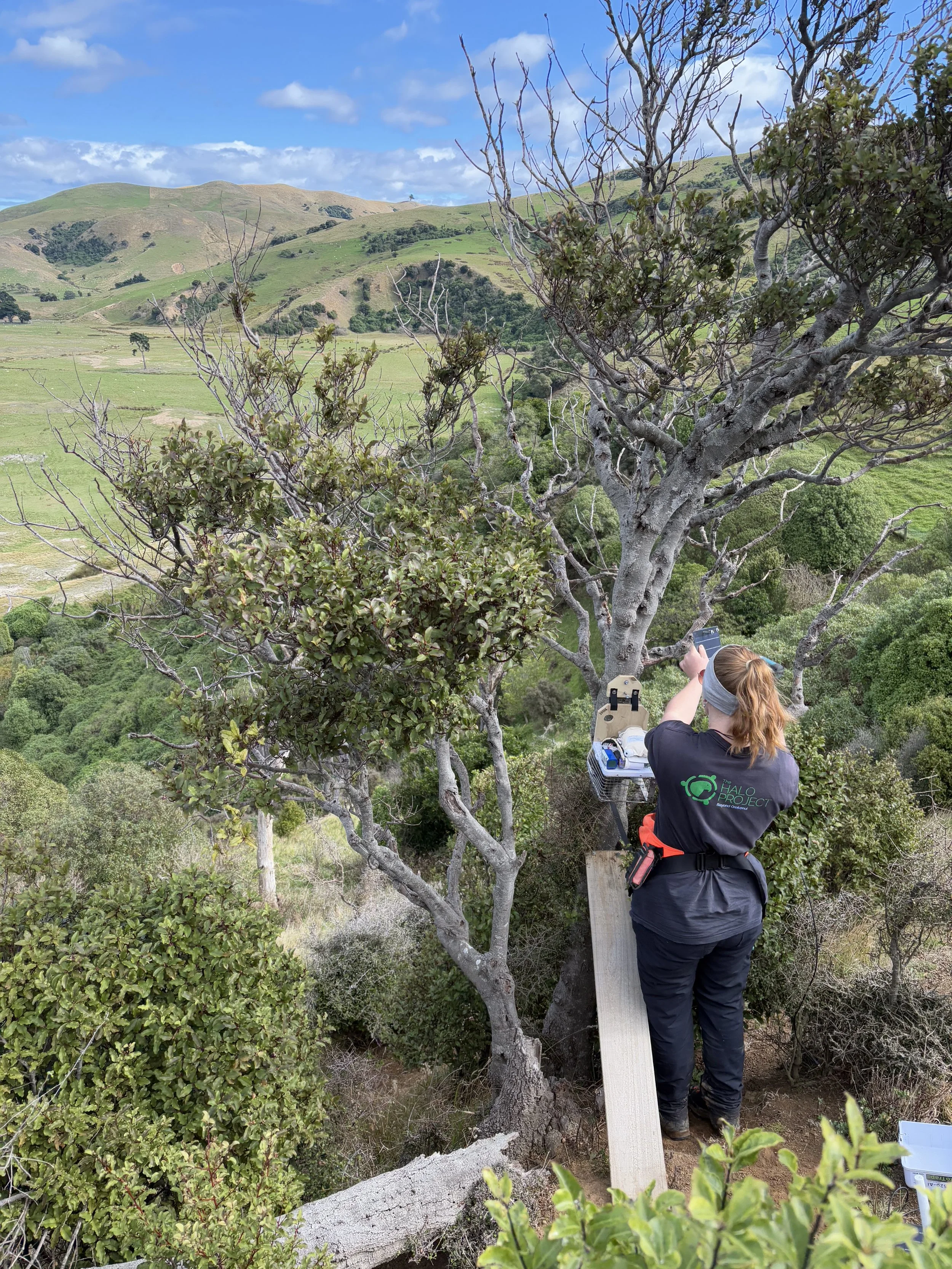
At its heart, the FTP system adds a smart “TrapNode” and camera to each AT220 trap, then links traps together over FTP’s Yarn Mesh wireless network so they can send data back in near real time. The node’s on‑board AI model is trained to recognise species approaching the trap; only when it is confident that a possum or rat is present does it arm the device, adding an extra safety layer on top of the AT220’s existing daytime lock‑out for non‑target species.
Key advantages in the network’s deployment include using solar power to overcome the AT220’s six‑month battery limit and support long‑term, remote operation, alongside an AI camera that records and transmits images of animals interacting with traps to give the team a much clearer picture of who is visiting, when, and how often - allowing the network to double as a monitoring tool. The system also incorporates GPS asset tracking, remote status updates and over‑the‑air software changes, which reduce unnecessary field visits and help keep traps operating effectively in challenging terrain.
All of this information feeds into FTP’s Information Management System (IMS), where the Halo team can view trap performance, review images, and run radio‑signal modelling to plan where new nodes and traps will be most effective across the landscape.
Learning by leading
Rolling out this technology in steep, forested country has revealed plenty of practical challenges – from finding sunny, line‑of‑sight sites for hardware, through to managing maintenance demands and fine‑tuning the AI thresholds so that the system remains cautious around kākā but still reliably catches possums at low densities. The team has responded with iterative refits and continual adjustments to camera placement and settings, underpinned by the detailed local data coming back through the network.
As one of the earliest and largest landscape‑scale users of AI‑enabled AT220s in Aotearoa, Halo is building an evidence base that will be invaluable for other Predator Free projects considering similar systems. Lessons from this trial – about stakeholder engagement, risk reduction to taoka species, trap placement, connectivity and cost – are already feeding into conversations across the Predator Free Dunedin partnership and beyond, helping ensure that new tools are adopted in ways that are both technically sound and socially and culturally grounded.