
Turning the tide: measurable gains for Karitāne & Kirimoko/Kilmog
The Karitāne Kirimoko/Kilmog Possum Programme is delivering a major biodiversity win for the Predator Free Dunedin whānau, with our delivery partner the Halo Project driving possum numbers down to near-target levels across this important part of rural Ōtepoti/Dunedin.
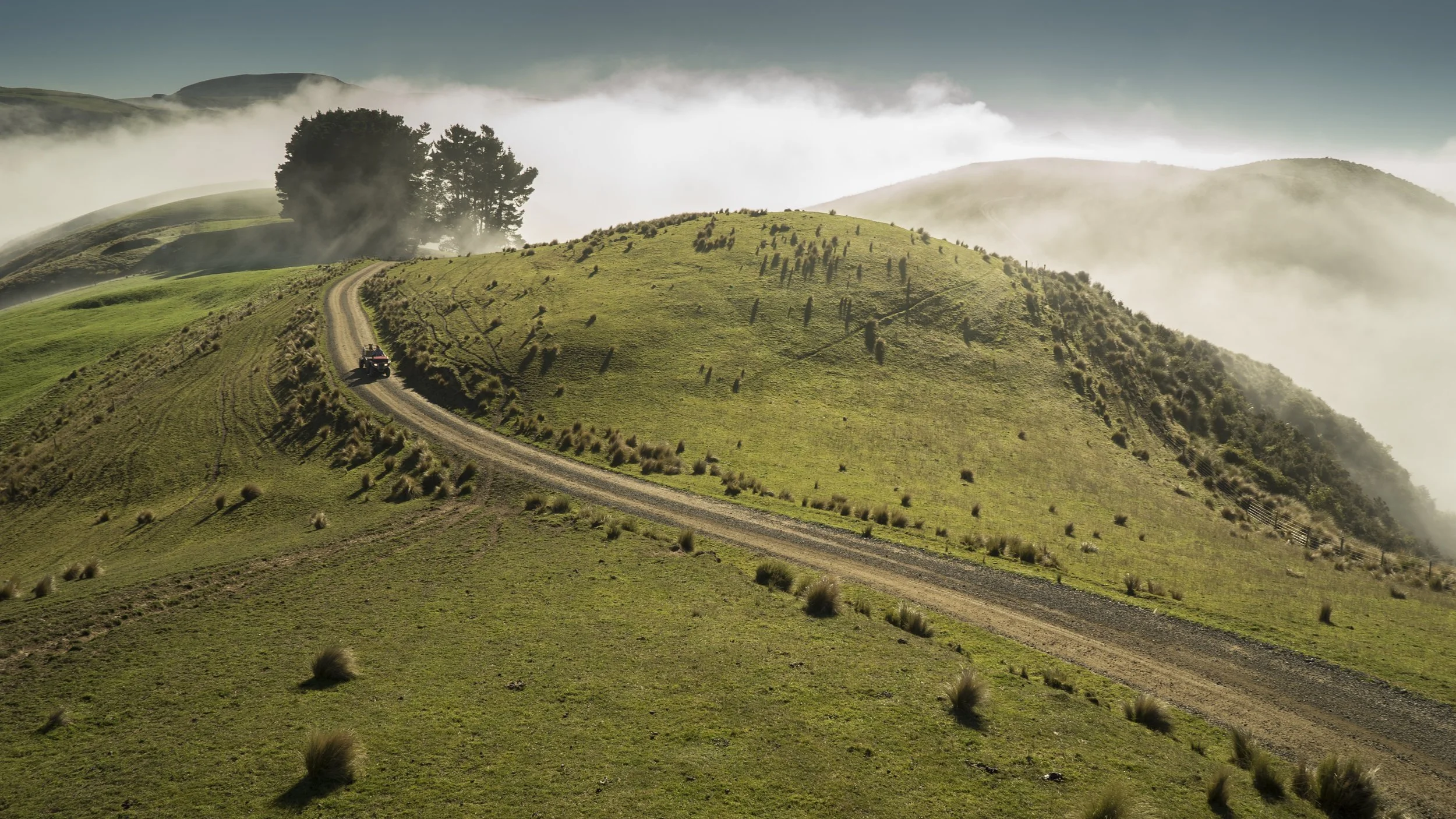
Above: The Karitāne Kirimoko/Kilmog Possum Programme working with landowners across farming landscapes in the area.
A strong turnaround in possum numbers
Launched in 2023, the Otago Regional Council (ORC) funded programme set out to tackle a sharp rebound in possum numbers after earlier OSPRI control wound up in 2020, focusing on two blocks: Kirimoko/Kilmog, where there was a history of control, and Karitāne, where no coordinated control meant numbers had gotten significantly out of hand. Both areas were working to an ambitious goal of 5% RTCI (Residual Trap Catch Index), using a backbone of AT220 self‑resetting traps.
Residual Trap Catch Index (RTCI) is a method used for monitoring and estimating the relative density of possums in a specific area. It involves setting out traps for a certain period (trap-nights) and then calculating the percentage of those trap-nights in which a possum was captured
Baseline monitoring told a clear story at the outset, with RTCI values sitting at 23.8% for Kirimoko/Kilmog and 54.5% for Karitāne, well above the level needed to protect native habitats and manage bovine tuberculosis (TB) risk. By June 2025 those numbers had dropped to 5.6% and 6.2% respectively – an overall reduction of around 84% and several thousand possums removed from the landscape.
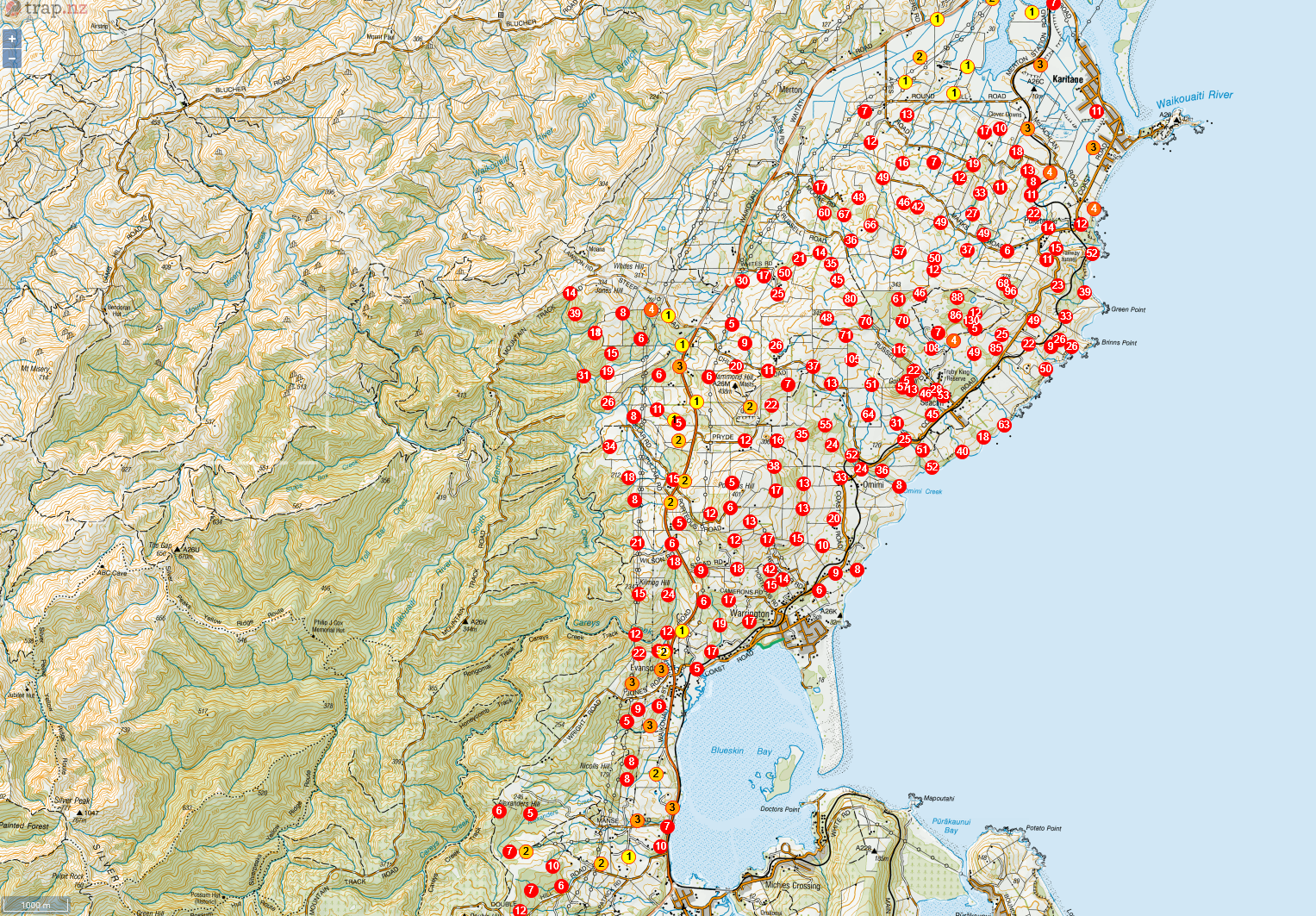
Above: The circles on the map show the number of predators removed by each device.
Smart tools, local knowledge
The Halo team has shown that a lean grid of AT220s can steadily chip possum numbers down in country like Kirimoko/Kilmog, and ramping up with additional trapping and night shooting to assist in problem hotspots, as was required in Karitāne. This mix of modern devices and hands‑on follow‑up builds directly on earlier landscape‑scale knockdown work and expands the Predator Free Dunedin total footprint.
Landowners are seeing the change first‑hand, with one farm alone accounting for more than 1,500 possums removed, giving people confidence to invest in native planting and protect productive land. Fewer possums mean less browsing pressure, lower TB risk, and better conditions for species like forest birds, lizards and invertebrates that sit at the heart of Predator Free Dunedin’s collective vision.
Looking ahead for Karitāne-Kirimoko/Kilmog
With a monitor due in December 2025, the team are on track to reach the 5% RTCI target at the end of 2025 and to maintain low numbers across both blocks. Fresh funding from the Otago Regional Council will carry this momentum into 2026 and 2027, helping the Halo Project and local communities lock in these hard‑won gains as part of Predator Free Dunedin’s wider landscape‑scale effort.